
By
Rodrigo
Freeman
5 times
Authentic
Pheidippides
Run
Finisher
In 2025 I completed the 490km Authentic Pheidippides Run for the fifth time without a supported crew, it is without a doubt my favorite race, I love the route and the amazing volunteers who make my adventure a lot more special and I am already planning to be at start line in 2026.
Over the last few months, I have been getting more and more messages from athletes who intend signing up. And for this reason, I decided to write this guide to facilitate your participation without a support crew.
Your arrival in Athens and booking a hotel room: Athens International Airport isn’t very far from the city center; you can easily take advantage of the subway system that will get you to your hotel. However, if you are arriving late at night, you will need to get a taxi, currently the price is set at 55 euros between midnight and 5am and 40 euros during the day (make sure the price is agreed beforehand to avoid arguments).
Booking a room in Athens could not be easier, I regularly use apps like Booking.com but you can also try phoning the hotel directly which can work out cheaper sometimes. The important thing when booking a room is making sure you will be allowed to leave your suitcase with the hotel whilst you are running to Sparta and back. I usually stay in hotels near Metaxourgeio Metro Station because from there it is around 12 minute-walk to the race start and generally not too far from race registration and delivery of drop bags which happens the evening before the race. This area will also have cafes/restaurants and mini supermarkets for last minute purchase of supplies. It is important to think about what to eat for breakfast in the morning of the race as it starts at 6am, I usually bring it with me from home but some hotels offer breakfast boxes if requested the night before. Runners usually arrive two nights before the race and stay until Tuesday following the finishing ceremony on Monday night.
Should I book a room for when I finish? It is entirely up to you but it is not difficult to book one when you finish. But remember that if you think you will finish on Monday morning, I would recommend booking your room from Sunday night, so that you don’t have to wait for the room to be ready on Monday afternoon after running 490km.
How to navigate the course? Most ultrarunners these days will use their watch to navigate the course. The organizers will provide, nearer the time of the event, the most up to date GPX file to add to your watch and also a KML file to be used with Google Maps on your phone, just make sure your devices can last the whole race. Over the years the route has changed very little, mainly because of temporary road works. If you have already participated at Spartathlon, you will be familiar with the route except Spartathlon climbs Parthenio Mountain whilst Authentic Pheidippides will climb Artemisio (in my view, road shoes are ok for this section). There are also a few kilometers on a different road on the way to Ancient Nemea.
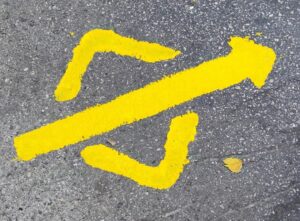
The organizers will paint the roads using the sign on the picture below and they will also use ribbons and reflective signs when unable to paint the road, for example in gravel roads.
Despite all the effort to stop runners from getting lost, people will sometimes take the wrong route, especially when returning from Sparta after many hours of running and lack of sleep. If you are not sure, make sure you check your watch or your phone, nobody wants to run extra kilometers!
Checkpoints/Rest points and Drop Bags: in 2025 the organizers provided 78 supply points and 12 rest points where
athletes can sleep and leave their drop bags. The smaller supply points will provide a mixture of water, Cola, juices, crisps, dry fruits, dry/salty biscuits, peanuts, etc. Many of these supply points will be unmanned on the return to Athens but you can just help yourself to the things you need. The main checkpoints are Kinetas (54km-431km), Examilia (86km-399km), Nemea (118km-367km), Nestani (168km-317km), Tegea (192km-293km) and Voutiani (232km-253km). In these main checkpoints you will find hot food such as pasta, soup/bread, pies, potatoes, boiled eggs, etc as well as hot tea and coffee. Basically, you will have 6 main checkpoints on the way to Sparta and the same 6 when you return to Athens. During registration, you will also be able to give the organizers your drop bags to be delivered to these checkpoints. You will also be able to sleep in these areas, the organizer will provide basic mattresses, or yoga-style mats and sometimes inflatable airbeds as well as some blankets in case it is cold, just don’t expect luxury.
Dealing with Dogs: I love dogs and my training partner is my dog Monty, a very handsome Hungarian Vizsla. Unfortunately, in Greece there will be some occasional encounters with stray dogs, if you’re feeling sleepy, it will definitely wake you up! In the last few editions, the organizers have kindly provided dog repellent from the main checkpoints, these devices are usually the size of a TV remote control and will emit a sound that we can’t hear but it will annoy the dog and repel them, you can pick these devices up from the main checkpoints and return when you don’t feel the need to carry them. My Japanese friend Tateno, 2-time finisher, used a 1-dollar fake pistol to scare the dogs away!

There are also other strategies that you can employ; for example, if you hear/see a stray dog that doesn’t seem very friendly, look on the ground for a stick; the stick can be used to maintain a safe distance from you and the dog and help protect you. My favorite technique is to raise both my arms in the air in order to make yourself look big and shout at the dog, as if you were a bear. Trust me, most dogs will be more scared of you than vice-versa. A Japanese runner has unfortunately been bitten by a dog and had to go to hospital to have the vaccine. If you’re worried, you can have the vaccine before you arrive in Greece. Usually, dogs will leave you alone when you pass their territory. Don’t be surprised if you find yourself a friendly dog that decides to run with you for a few kilometers.
Weather: The weather and temperature in Greece can change dramatically in November so it is important that you’re prepared for hot and very cold temperatures, especially in the Greek countryside. In the 2018 edition runners encountered snow and flooding and, in that year, only 5 runners managed to conclude the race. We haven’t had weather this bad ever since.
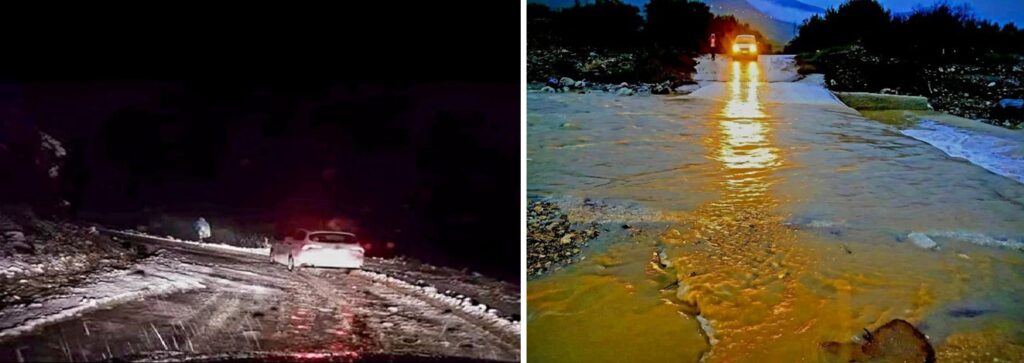
Usually, I keep checking the weather forecast in various parts of the route to decide what to place in my drop bags in terms of clothing, etc. There are a ton of apps to check the weather in Greece but I like AccuWeather. In my 5 participations I encountered all sorts of weather, hot, cold, very cold, strong winds and heavy rain. In 2022 I remembered leaving Sparta and once I arrived in the motorway the temperature dropped very quickly and all the vegetation alongside the road were frozen, I was wearing trousers, base layer, jacket, gloves and a hat and still felt very cold. Another runner had this brilliant idea and made a gilet for me out of a bin bag, I also wrapped a foil blanked around my legs and I managed to stay warm until the next day when the sun came out again. In 2025 I thought the weather was very mild and pleasant but remember I am used to training and racing in the United Kingdom; some of my team mates from Brazil thought that it was very cold on top of the mountain. In the 2024 edition we experienced some spells of heavy rain at night, I also remember arriving in Examilia on the return from Sparta and a street thermometer was showing 0C. I think you got the idea, be organized and prepared for all sorts of weather, it is always preferable to have enough clothing and not need it then the other way round.
Drop Bags, what to bring? I am not going to tell you what extra food to bring, as experienced ultrarunners you should have a good idea of the sort of foods and drinks you enjoy during a long race. In terms of equipment, I usually leave spare headtorches, spare batteries, spare red lights, spare jackets, spare shoes, socks, lubricants, etc in my drop bags.
I usually carry a headtorch/red lamp and jacket with me from the start but if you choose not to carry these, Examilia is usually the checkpoint that you can pick up your headtorch before it gets dark and also warmer clothing for your first night.
I also carry with me from the start a charging cable for my phone and watch as well as a small power bank. I also like to divide the race in 3 x 100 miles (160km) and Nestani checkpoint fits perfectly with this plan. In Nestani I tend to change shoes, socks and clean clothes, I also love brushing my teeth there. Another tip is to have a mains charger in your bag so when you decide to sleep you can also charge your phone inside the checkpoint.
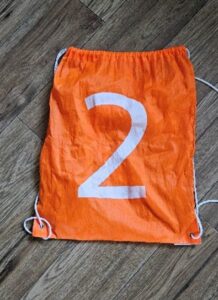
Between Athens and Corinth there are also many shops open during the day where you can always find something different to eat or drink, the rest of the route is more deserted but there will also be some shops in Sparta. Just note that the drop bags are not provided, I recommend strong bags like the one in the picture that can opened and closed with ease. Bags will need to be labelled with name, checkpoint name and checkpoint number.
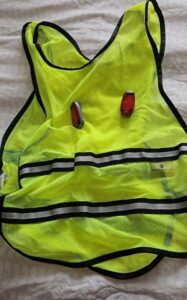
Motorway Sections and your Health/Safety – At times, the route will pass through some very busy and dangerous roads, make you sure you are wearing high-visibility vests/belts at all times and a red light is displayed on your back during darkness. The use of headphones is strictly forbidden. In the 2025 edition Greek runner Temonaek was hit by a car and had to abandon the race, thankfully he is recovering well now.
Race Briefing: in 2025 the race briefing was presented via a video on YouTube (in English), you can watch it here: https://www.youtube.com/watch?v=RDF2T2RbFQo
Watching the YouTube race briefing and reading my guide will give you a great insight into how to prepare for this race.
My personal advice for your first participation: There are no prizes arriving in Sparta quickly (currently runners have 43 hours to arrive in Sparta). Take your time and you will find that your return will be a lot more enjoyable. Also remember to be kind to the organizers and volunteers, these people dedicate a lot of their free time to give you a chance to achieve your goals, they are very supportive and willing to help despite the language barrier. So, don’t forget to smile and say Efcharisto (Thanks in Greek).